Introduction
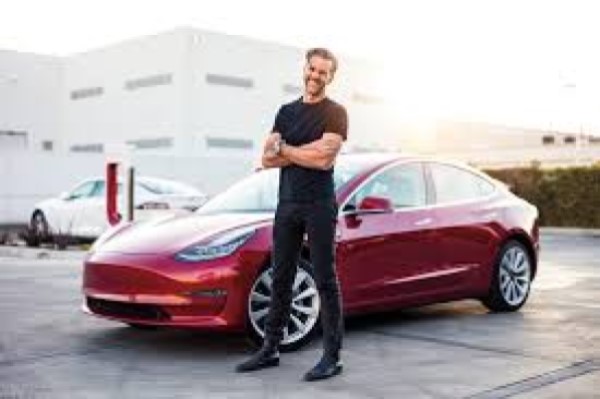
In the rapidly evolving world of electric vehicles, one name consistently stands out for redefining automotive design: Franz von Holzhausen. Known for his innovative thinking and sleek aesthetic approach, Franz von Holzhausen has played a critical role in shaping the visual identity of modern electric cars. As the Chief Designer at Tesla, Inc., he has helped transform the automotive industry by blending futuristic design with cutting-edge technology.
From designing legendary concept cars to creating some of the most recognisable electric vehicles on the road today, his influence reaches far beyond traditional automotive design. This article explores the life, career, and achievements of Franz von Holzhausen, the creative mind behind Tesla’s most iconic vehicles.
Early Life and Background
Childhood and Early Interests
Franz von Holzhausen was born on 10 May 1968 in Simsbury, Connecticut, United States. From a young age, he developed a fascination with cars and design. While many children admired vehicles simply for their speed or appearance, Franz was curious about how cars were created, shaped, and engineered.
His early passion for automobiles eventually grew into a desire to design vehicles that were not only visually appealing but also technologically advanced.
Education in Transportation Design
To pursue his passion professionally, Franz studied at Syracuse University before transferring to the prestigious ArtCenter College of Design in Pasadena, California. The institution is widely recognised as one of the world’s leading schools for automotive design.
At ArtCenter, he earned a Bachelor of Science degree in Transportation Design in 1992. The programme helped him develop the creative and technical skills required to work in the competitive automotive industry.
Early Career in the Automotive Industry
Working at Volkswagen
Franz von Holzhausen began his professional career at Volkswagen in 1992. During his time there, he contributed to several design projects, including the Concept One, which later evolved into the famous Volkswagen New Beetle.
The New Beetle was an important design milestone, as it successfully revived the iconic Beetle shape with a modern interpretation. This experience gave Franz valuable exposure to large-scale vehicle production and design strategy.
Design Contributions at General Motors
In 2000, Franz moved to General Motors, where he worked on several notable sports car designs. Among his most recognised projects were the Pontiac Solstice and the Saturn Sky.
Both vehicles received praise for their sporty appearance and distinctive styling. His work during this period demonstrated his ability to create cars that balanced performance, elegance, and practicality.
Leadership Role at Mazda
In 2005, Franz joined Mazda as Director of Design for its North American studio. Here he led innovative concept car projects, including the striking Mazda Furai concept.
The Furai concept showcased a bold design language inspired by racing aerodynamics. It represented a forward-thinking approach that would later influence Franz’s work at Tesla.
Joining Tesla and Shaping the Future of Electric Vehicles
Becoming Tesla’s Chief Designer
In 2008, Franz von Holzhausen made a career-defining move by joining Tesla, Inc. as its Chief Designer. At the time, Tesla was still a young company attempting to disrupt the traditional automotive industry with electric vehicles.
Working closely with Tesla’s CEO Elon Musk, Franz became responsible for designing vehicles that could compete with luxury petrol cars while embracing electric technology.
Designing the Tesla Model S
One of Franz’s most significant achievements was leading the design of the Tesla Model S. Introduced in 2012, the Model S revolutionised the electric vehicle market.
Unlike earlier electric cars, which often looked unconventional, the Model S featured a sleek, elegant design comparable to luxury saloons. Its minimalistic interior and large touchscreen interface set a new standard for modern vehicles.
The Model S proved that electric cars could be both high-performance and visually appealing.
Iconic Tesla Vehicles Designed by Franz von Holzhausen
Tesla Model X
Following the success of the Model S, Franz led the design of the Tesla Model X. This electric SUV introduced several unique features, including the famous Falcon Wing doors.
The Model X combined practicality with futuristic styling, making it one of the most distinctive SUVs ever produced.
Tesla Model 3
Perhaps the most impactful design in Tesla’s history is the Tesla Model 3. Designed to be more affordable than previous Tesla models, the Model 3 aimed to bring electric vehicles to the mass market.
Franz adopted a highly minimalist approach, reducing interior complexity while focusing on digital controls and clean lines. The result was a car that felt modern, simple, and technologically advanced.
Tesla Model Y
The Tesla Model Y continued Tesla’s design evolution by combining elements from the Model 3 with SUV practicality. It quickly became one of the company’s best-selling vehicles globally.
Its aerodynamic form and spacious interior demonstrate Franz’s ability to blend efficiency with everyday usability.
Tesla Cybertruck
One of the most controversial yet innovative designs created under Franz’s leadership is the Tesla Cybertruck. With its sharp angles and stainless-steel exterior, the Cybertruck looks unlike any traditional pickup truck.
The design intentionally challenges conventional automotive aesthetics, emphasising durability and futuristic styling.
Tesla Semi and Roadster
Franz also played a key role in designing the Tesla Semi, an electric truck aimed at transforming the logistics industry, and the new generation Tesla Roadster, which promises exceptional performance and speed.
These vehicles highlight Tesla’s ambition to electrify not only passenger cars but also commercial transport.
Design Philosophy and Approach
Minimalism and Functionality
One of the defining aspects of Franz von Holzhausen’s design philosophy is minimalism. Tesla vehicles often feature clean surfaces, smooth lines, and uncluttered interiors.
Rather than relying on numerous physical buttons, Tesla’s cabins focus on digital interfaces and large touchscreen displays. This approach creates a modern and futuristic driving experience.
Technology-Driven Design
Franz believes that automotive design should reflect technological innovation. By integrating software and hardware seamlessly, Tesla vehicles feel more like advanced technological products than traditional cars.
This philosophy aligns perfectly with Tesla’s mission to accelerate the world’s transition to sustainable energy.
Aerodynamics and Efficiency
Another important aspect of his work is aerodynamics. Electric vehicles benefit greatly from improved efficiency, and streamlined designs help extend driving range.
Franz’s designs carefully balance aesthetics with performance and energy efficiency.
Influence on the Automotive Industry
Redefining Electric Vehicle Design
Before Tesla’s rise, electric vehicles were often associated with unusual or unattractive designs. Franz von Holzhausen helped change that perception by creating cars that were stylish, elegant, and desirable.
Today, many manufacturers are adopting similar minimalist design principles in their electric vehicles.
Inspiring Future Designers
As one of the most influential automotive designers of the modern era, Franz has inspired a new generation of designers to think differently about vehicles.
His work demonstrates that sustainability and innovation can coexist with luxury and beauty.
Personal Life
Despite his global influence in the automotive industry, Franz von Holzhausen maintains a relatively private personal life. He is married to Vicki von Holzhausen, a designer known for developing sustainable materials used in fashion and automotive interiors.
Their shared commitment to sustainability reflects the broader environmental goals associated with Tesla’s mission.
Conclusion
Franz von Holzhausen has become one of the most important figures in modern automotive design. From his early career at major car manufacturers to his groundbreaking work at Tesla, Inc., he has consistently pushed the boundaries of what vehicles can look like and how they function.
Through iconic models such as the Tesla Model S, Tesla Model 3, and Tesla Cybertruck, he has helped reshape the global automotive landscape.